
ICF Homes in Ireland, Priced by the m²
Tell us the house layout, floor area and build stage. See what an ICF home costs per m² in Ireland. Then one local builder rings you with a written price.
Free, no obligation. One local builder prices it, not five.
- €2,300 to €3,100/m²turnkey ICF home cost incl. 13.5% VAT
- €130 to €185/m²ICF wall area supplied, braced and poured
- 0.11 to 0.15 W/m²Kexternal wall U-value, passive-ready build
- 5,095one-off houses granted planning in 2025, CSO
Six Irish ICF self-build paths, priced by the m²
Tap any house layout to read real Irish floor-area and shell figures.
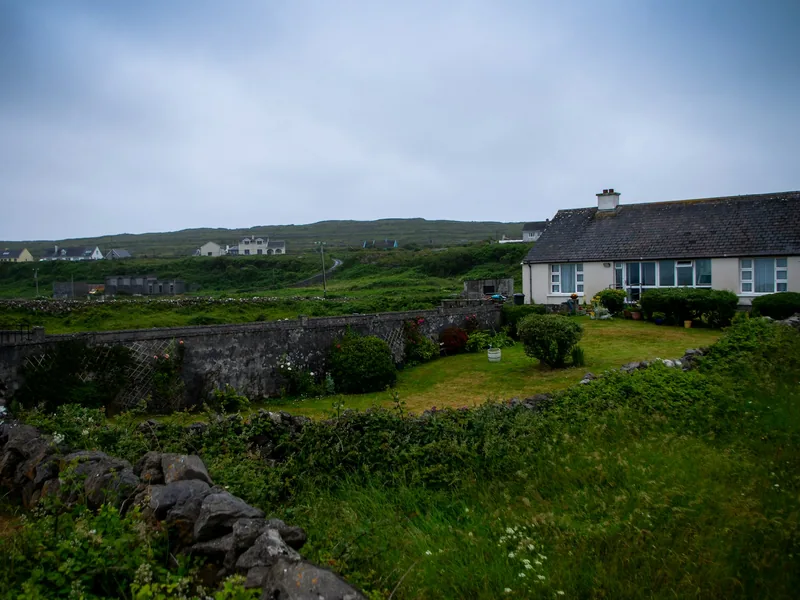 Single-storey ICF bungalow€2,350 to €3,050/m² turnkey
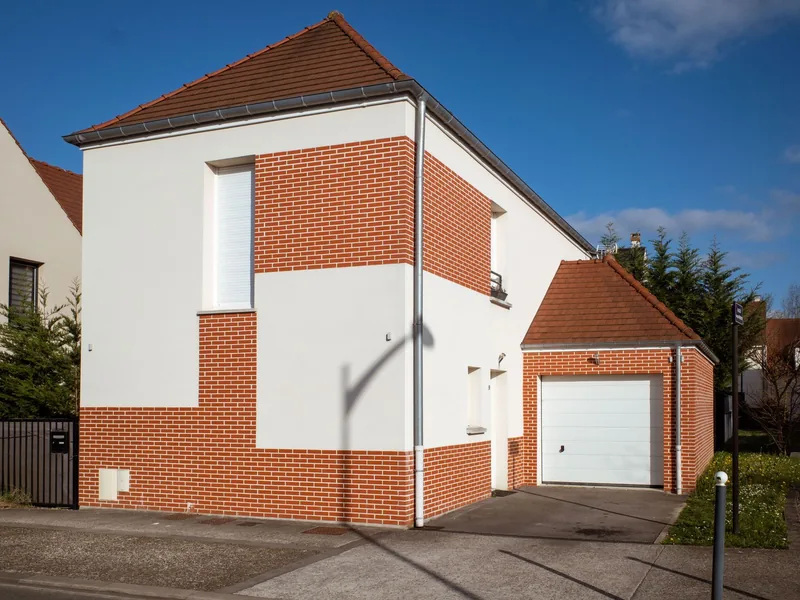 Two-storey family ICF home€2,300 to €3,000/m² turnkey
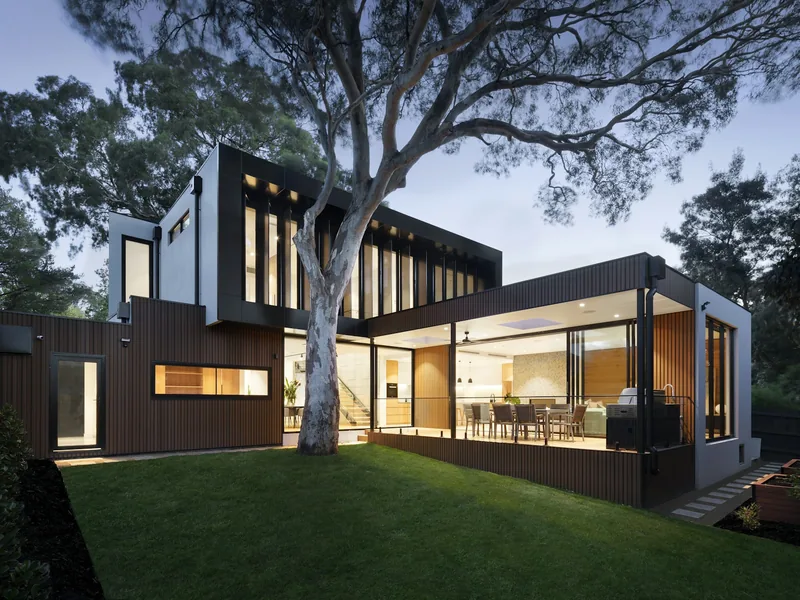 Passive A1 rural ICF house€2,550 to €3,250/m² turnkey
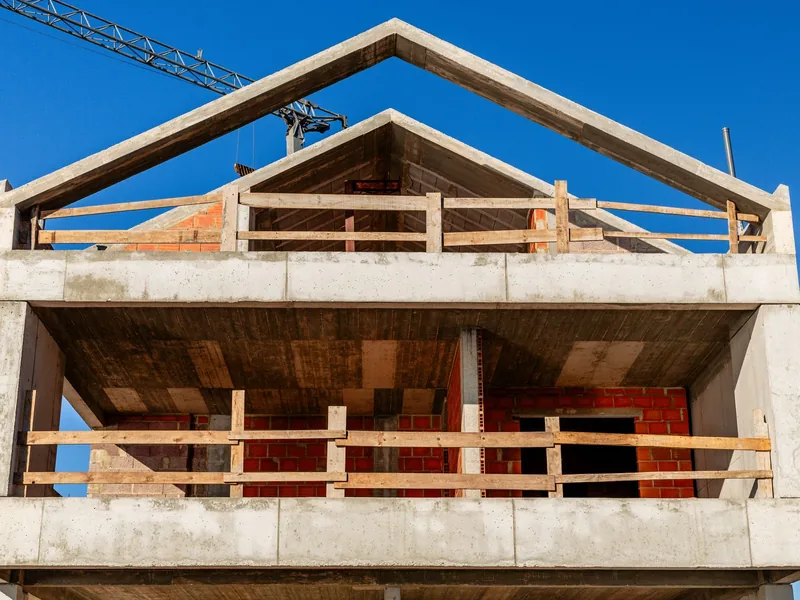 ICF shell-and-core build€1,250 to €1,650/m² floor
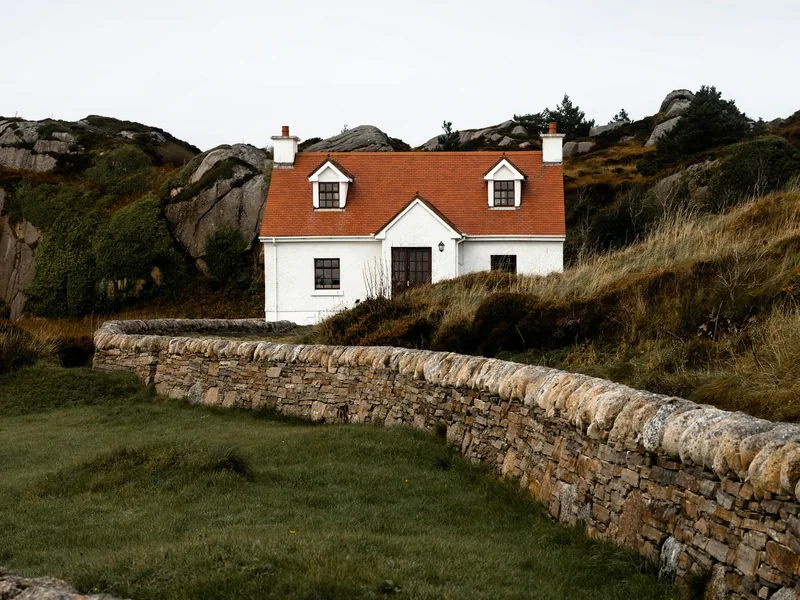 Dormer & split-level ICF home€2,450 to €3,200/m² turnkey
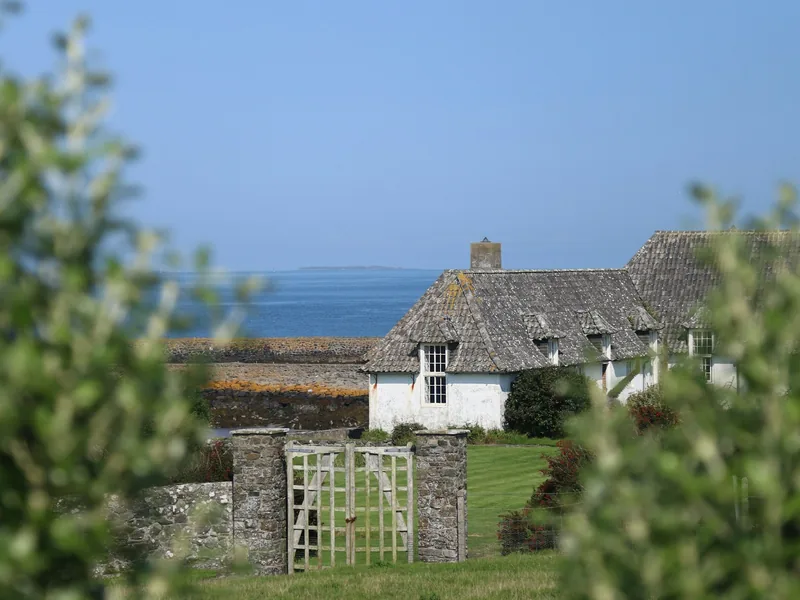 ICF extensions & coastal homes€2,400 to €3,150/m² turnkey
Price my ICF home
Four taps show your Irish ICF build figure before we ask for a phone number. One local builder rings you, not five.
Example: A two-storey family ICF home, 150 to 200 m², full turnkey (planning granted) comes to €403,000 to €525,000 (€2,300 to €3,000/m² incl. 13.5% VAT).
How this ICF build range is calculated
Figures multiply going Irish ICF shell-and-core (€1,250 to €1,820/m²) or full turnkey (€2,300 to €3,250/m²) build rates, inclusive of 13.5% construction VAT, by the midpoint of your chosen floor area band. Dublin sites carry a 6% site-access weighting and Kildare, Meath and Wicklow carry a 3% weighting. Site acquisition, percolation/septic tanks, ESB/water connection fees, kitchen PC upgrades and architect or engineer fees sit outside the base build rate. Only a builder reviewing your planning drawings and soil test gives a firm tender figure.
Three phases from planning drawings to a poured home
- Check your m² range onlineSelect house layout, approximate floor area and shell or turnkey scope to see your guide price first.
- One Irish ICF builder reviews your plansYour outline goes to a single county builder who measures wall elevations, raft ground conditions and crane access.
- Stack, brace, pour and certifyNSAI Agrément EPS forms are stacked, reinforced with rebar, boom-poured in storey lifts and signed off for bank drawdowns.
Vague builder ballparks, or an itemised m² tender
Vague builder ballparks
- Wall-area rates quoted without foundations, boom pump or render
- Cold bridges left at window cills and raft junctions
- Five contractors phoning you from a shared directory form
An itemised m² ICF tender
- Your Irish floor-area range displayed before you leave a phone number
- Agrément wall spec, rebar schedule and U-value written line by line
- One local Irish ICF builder matches stage costs to your bank drawdowns
Four checks self-builders ask before a call
- Will I be hounded with calls?
- No. Your build outline reaches a single ICF home builder in your county, and nobody else. No bidding directories and no follow-up spam.
- Will Irish banks lend on an ICF self-build?
- Yes. Mainstream Irish lenders fund ICF homes when the block system carries NSAI Agrément or ETA certification and an engineer signs each drawdown stage.
- What is the difference between wall m² and floor m²?
- Supply-and-pour wall rates (€130 to €185/m²) measure vertical wall faces only. Shell-and-core (€1,250 to €1,650/m²) and turnkey (€2,300 to €3,100/m²) measure total internal floor area.
- How fast does an ICF house reach roof level?
- Once the insulated raft cures, experienced crews erect, brace and pour a typical bungalow or two-storey shell in 2 to 4 weeks, weather-tight in 8 to 14 weeks.
See your ICF self-build cost before anyone rings
Choose the house layout, approximate floor area and shell or turnkey scope. When you want a builder's figure, your outline goes to a single ICF home builder in your county.
How ICF compares with cavity block and timber frame
Built for wet Irish Atlantic winters, continuous insulation and high acoustic mass.
ICF (Insulated Concrete)
- Turnkey Irish rate (incl. VAT)
- €2,300–€3,100/m²
- Achieved wall U-value
- 0.11–0.15 W/m²K
- Typical airtightness
- 0.3–0.6 ACH50
- Wet Irish winter build
- EPS insulates curing concrete
Cavity block
- Turnkey Irish rate (incl. VAT)
- €2,250–€3,000/m²
- Achieved wall U-value
- 0.15–0.18 W/m²K
- Typical airtightness
- 1.2–2.5 ACH50
- Wet Irish winter build
- Mortar frost & rain stops
Timber frame
- Turnkey Irish rate (incl. VAT)
- €2,200–€2,950/m²
- Achieved wall U-value
- 0.12–0.16 W/m²K
- Typical airtightness
- 0.6–1.2 ACH50
- Wet Irish winter build
- Exposed frame needs fast drying
See the full engineering and cost comparison on ICF vs cavity block and timber frame and how ICF concrete pours work on site.
Indicative total Irish ICF build budgets by floor area
CSO 2025 planning data puts the average Irish one-off house around 225 m². All totals include 13.5% VAT.
Explore line-by-line allowances for rafts, hollowcore slabs, acrylic render, heat pumps and MVHR on ICF house cost per m² in Ireland.
NSAI Agrément, BCAR and bank drawdown rules
Four statutory and lender checks to lock down before breaking ground.
- Verify NSAI Agrément or ETA certification. Your ICF block system must hold a current Agrément certificate or European Technical Assessment covering Irish Part A structural and Part B fire rules.
- File the Commencement Notice 14 to 28 days early. Lodge via the BCMS portal before excavating, electing either full Assigned Certifier supervision or the single-dwelling opt-out (S.I. No. 365 of 2015).
- Inspect rebar before every boom pour. Your structural engineer signs off foundation starter bars, lintel steel and vertical wall cages before concrete trucks arrive.
- Align lender drawdowns with fast ICF erection. Irish self-build mortgages release across 4 to 6 stages; agree your stage schedule early with your solicitor and builder.
Read our plain breakdowns of NSAI Agrément and BCAR sign-off and self-build mortgage stage payments.
ICF self-build crews across all 26 counties
Ground conditions, Atlantic exposure and concrete batching distance vary sharply by region.
From exposed Connemara and Donegal coastal bungalows needing silicone ETICS render and passive insulated rafts, to infill commuter-belt two-storey builds across Dublin, Kildare and Meath with tight boom-pump reach, choosing your county connects you with an ICF crew operating locally. Browse regional pricing for Galway & the West, Cork & Munster, Dublin & Leinster, Midlands & North, South-East or all 26 counties.
Five items every written ICF quote should confirm
Verify these before paying a block delivery deposit.
- NSAI Agrément or ETA certificate number. Named explicitly in the quote alongside the exact EPS/Neopor wall thickness and target U-value.
- Concrete grade, rebar schedule and pump hire. Confirm C30/37 structural ready-mix, T12/T16 bar schedule and boom-pump day rates are included.
- Wall area versus floor area pricing. Make sure shell figures state clearly whether rates refer to wall elevation m² or gross internal floor m².
- Insulated raft or strip footing junction. Detail the radon membrane, passive EPS edge insulation and starter dowels linking foundation to walls.
- Window and door bucks plus lintels. Confirm whether waterproof composite bucks, thermally broken cills and steel/concrete lintels are supplied.
Read all ten tender lines on ICF house cost per m².
Common questions before you pour
How much does an ICF house cost per m² in Ireland?
A full turnkey A1 or A2 ICF home in Ireland costs €2,300 to €3,100/m² of floor area including 13.5% VAT, putting a 180 m² detached self-build at €414,000 to €558,000 before site purchase and professional fees. A weather-tight shell-and-core package runs €1,250 to €1,650/m² of floor area, while the insulated concrete walls alone (supplied, braced, reinforced and poured) cost €130 to €185/m² of wall elevation area. Full Irish cost breakdown.
What does €130 to €185/m² cover on ICF walls?
That figure measures vertical external wall area only: interlocking EPS or Neopor forms, steel alignment bracing hire, rebar cages, boom-pump placement and C30/37 ready-mix concrete. Foundations, roof, windows, external render and interior fit-out are priced separately.
Can I build an ICF home to A1 BER or Passive House standard?
Yes. Standard 250 to 300 mm ICF walls achieve 0.13 to 0.15 W/m²K, while 350 to 450 mm graphite-enhanced EPS forms hit 0.11 W/m²K with sub-0.6 ACH50 airtightness. Passive A1 ICF homes.
Is an ICF bungalow more expensive per m² than a two-storey home?
Typically €50 to €100/m² higher across the floor plate (€2,350 to €3,050/m² versus €2,300 to €3,000/m²) because a single-storey house carries a larger foundation raft and roof area per square metre of living space. ICF bungalows.
How does Irish bank self-build lending work for ICF houses?
Irish self-build mortgages typically release funds across 4 to 6 inspected construction stages, normally paid in arrears after your engineer certifies completion. Because ICF walls rise to roof plate within weeks, self-builders need a working cash buffer or staged supplier credit to bridge the rapid raft-to-roof stretch. Self-build mortgages & drawdowns.
What exterior finish goes onto ICF blocks in wet Irish weather?
External ICF walls are finished with a certified ETICS acrylic or silicone thin-coat render reinforced with alkali-resistant fibreglass mesh (€95 to €140/m²), brick slips or stone cladding. Render, plaster and services.
What VAT rate applies to an ICF home build in Ireland?
Turnkey house-building contracts and supply-and-pour ICF packages on new Irish homes carry the reduced 13.5% construction VAT rate. Direct-labour self-builders buying ICF blocks, steel rebar or ready-mix concrete on a supply-only basis pay 23% VAT on those materials.
Who contacts me after I finish the 4-tap ICF planner?
Your floor area, layout and stage outline go to a single ICF home builder in your county, and nobody else. They review your drawings and provide an itemised written figure.